



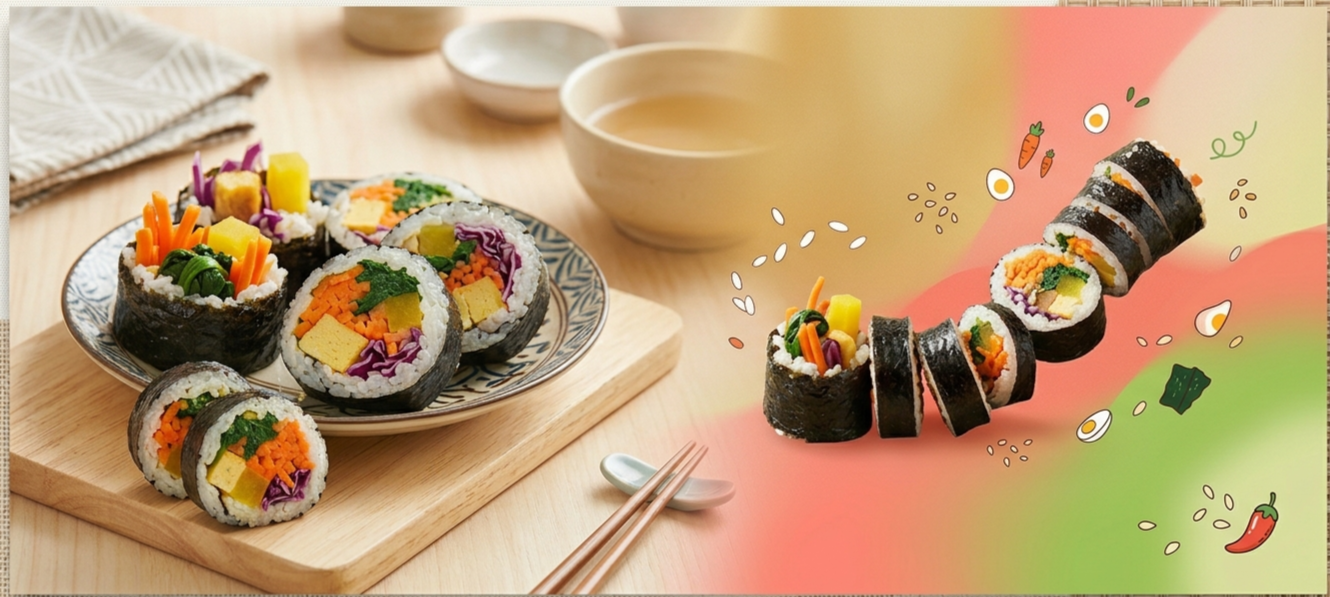
Let Gimbap Reintroduce Itself
Gimbap, a beloved Korean dish, is often overshadowed by its more internationally recognized cousin, sushi. Yet, gimbap offers a unique and delicious culinary experience worthy of its own spotlight. In this article, we invite you to discover the charm of gimbap, its cultural significance, and why it deserves a fresh introduction to your palate.
What Is Gimbap? Understanding the Basics
Definition and Ingredients
Gimbap (김밥) is a Korean dish made from cooked rice and various fillings rolled in sheets of dried seaweed (gim). Typically, gimbap includes ingredients such as seasoned rice, vegetables like carrots and spinach, pickled radish (danmuji), egg, and often protein sources like fish cake, crab sticks, or beef. The roll is sliced into bite-sized pieces, making it convenient and perfect for on-the-go eating.
How Gimbap Differs From Sushi
While it might look similar to sushi, gimbap differs significantly. Sushi primarily uses raw fish and vinegared rice. Gimbap rice is seasoned with sesame oil and salt instead of vinegar, giving it a distinct flavor. Moreover, gimbap fillings tend to be cooked or pickled rather than raw, catering to different taste preferences.
The Cultural Significance of Gimbap in Korea
A Popular Korean Snack and Meal
Gimbap is a popular choice for picnics, school lunches, and street food in Korea due to its portability and satisfying taste. It is a staple in Korean convenience stores and is often enjoyed during family outings and festivals, symbolizing comfort and community.
Varieties of Gimbap
- Seafood Gimbap: Includes fillings like seasoned squid or tuna mayo.
- Vegetarian Gimbap: Contains various vegetables for a lighter option.
- Cheese Gimbap: A modern twist with added cheese for creaminess.
These variations demonstrate how versatile and adaptive gimbap can be.
Why Let Gimbap Reintroduce Itself?
A Hidden Culinary Gem
Despite its popularity in Korea, gimbap remains relatively underappreciated worldwide compared to sushi. Its simple ingredients and comforting flavors offer a delightful alternative for those seeking new tastes. Reintroducing gimbap allows a greater appreciation of Korean cuisine’s diversity.
Gimbap as a Healthy and Convenient Option
Gimbap is not only tasty but also nutritious. It combines protein, vegetables, and grains in one bite. The use of sesame oil and seaweed adds beneficial nutrients and healthy fats. For busy lifestyles, gimbap serves as an excellent grab-and-go meal.
How to Enjoy Gimbap Today
Where to Find Authentic Gimbap
Many Korean restaurants worldwide serve traditional gimbap. Additionally, Korean grocery stores and convenience stores often carry ready-made options. Trying gimbap from authentic sources provides the best experience.
Making Gimbap at Home
Preparing gimbap at home can be fun and customizable. Basic tools include a bamboo mat for rolling, seaweed sheets, cooked rice, and fillings of choice. This hands-on approach allows you to experiment with flavors and presentation.
Conclusion: Embrace Gimbap and Rediscover Korean Flavors
Let gimbap reintroduce itself as a flavorful, versatile, and accessible Korean dish. Its unique seasoning, diverse ingredients, and cultural significance make it an excellent addition to your culinary repertoire. Whether enjoyed as a snack, meal, or picnic treat, gimbap offers a delicious opportunity to explore Korean cuisine beyond the usual.